
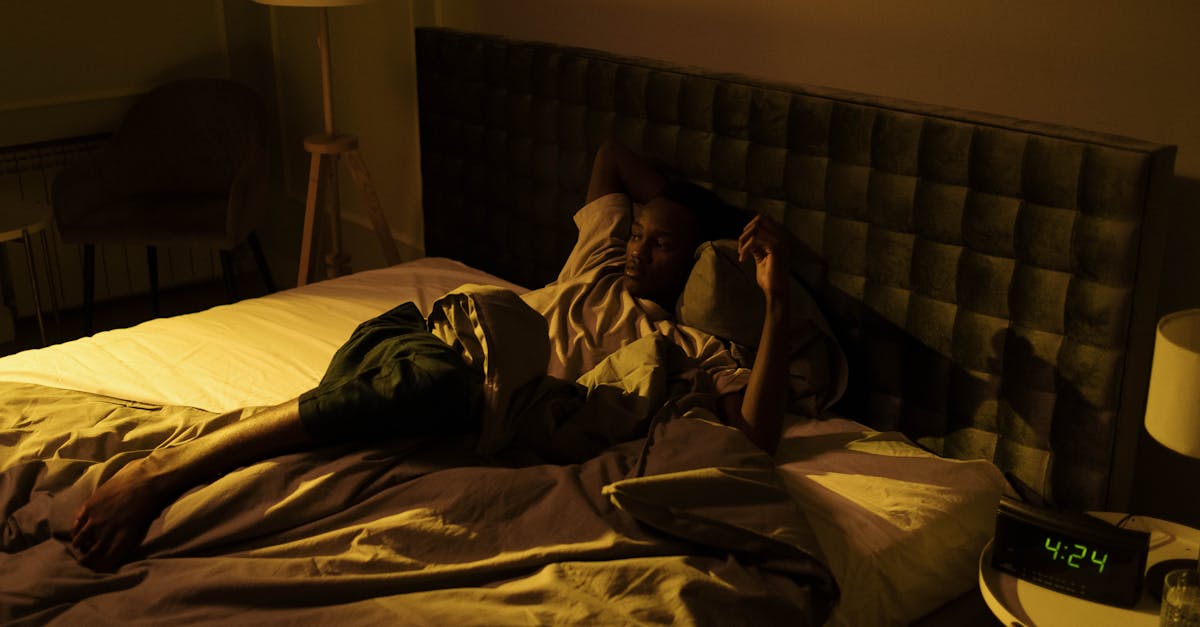
Most articles on falling asleep faster give you fifteen techniques and hope something works. This one does the opposite: it helps you identify your specific sleep-onset pattern, then routes you to the one or two fixes that will actually work for you.
If you’ve tried “everything” and you’re still lying awake, the problem isn’t that the techniques don’t work — it’s that you’re using the wrong technique for your pattern. A racing mind needs a different fix than a misaligned body clock. Trying to force sleep with breathing exercises when your circadian rhythm is three hours delayed wastes weeks of effort.
This guide teaches you to diagnose your pattern first, then apply the evidence-based intervention that matches it. You’ll know within one to two weeks whether you’ve found the right match.
What you’ll need
No tools or purchases required. These techniques rely on behavior change, not products.
Prerequisites:
- Willingness to track your sleep timing for one to two weeks
- Ability to control bedroom temperature (or use a fan)
- Access to bright outdoor light in the morning (or a 10,000-lux light box if needed)
- Fifteen minutes daily for worry-time practice (initially)
Before you start
These techniques are for people whose sleep latency is consistently longer than twenty minutes but who don’t have diagnosed sleep disorders like sleep apnea or restless leg syndrome. If you’ve been lying awake for more than thirty minutes at least three nights a week for three months or longer, that meets the clinical definition of sleep-onset insomnia, and you should see a sleep medicine specialist. If your racing mind is accompanied by daytime panic or persistent anxiety, talk to a mental health professional — sleep problems and anxiety disorders often require coordinated treatment.
The techniques below are behavioral interventions from cognitive behavioral therapy for insomnia (CBT-I), the gold-standard treatment for insomnia. Psychological and behavioral treatments show strong evidence for improving sleep onset, with gains that persist long-term.
Pattern-to-technique decision table
Before you try every technique, identify which pattern matches yours. Start with the technique listed, follow it consistently for the timeline given, and check the success criteria.
| Your pattern | Root cause | Starting technique | Success criteria (try for this long) |
|---|---|---|---|
| Tired but not sleepy. Lie in bed 8-9 hours, only sleep 6. Can’t “turn off” even when exhausted. | Sleep pressure deficit (too much time in bed dilutes sleep drive) | Sleep restriction therapy | 1-2 weeks; sleep latency drops below 20 min and you fall asleep quickly when you get into bed |
| Naturally sleepy at 1 AM but need to wake at 7 AM. Not tired at “normal” bedtime. | Circadian misalignment (body clock is delayed) | Morning bright light (30 min within 1-2 hours of target wake time) + evening light restriction | 5-7 days; you feel sleepy at your target bedtime instead of wired |
| Drowsy on the couch, but the moment head hits pillow, mind starts racing. | Conditioned arousal (bed has become associated with wakefulness) | Stimulus control (20-minute rule: leave bed if not asleep) | 1-2 weeks; you feel sleepy when you get into bed, not suddenly alert |
| Fall asleep fine initially but wake at 3-4 AM with racing thoughts. | Middle-insomnia (different from sleep-onset insomnia; may need additional intervention) | Cognitive offloading + check for blood sugar/cortisol issues | See a specialist if persists after 2 weeks |
| Physical discomfort — too hot, can’t get comfortable, tossing and turning. | Environmental factors blocking the body’s natural temperature drop | Cool bedroom (65-68°F), warm shower 60-90 min before bed | Same night to 3 days; you stop waking from overheating |
How to use this table: Pick the row that best describes your experience. Follow the starting technique for the timeline given. If you hit the success criteria, you’ve found your match. If not, move to the troubleshooting matrix below.
Time-in-bed calculator for sleep restriction
If your pattern is “tired but not sleepy” or you’re spending far more time in bed than you’re actually sleeping, use this calculator to set your sleep restriction window.
Step 1: Track your sleep for one week. Each morning, record:
- What time you got into bed
- What time you fell asleep (estimate)
- What time you woke up
- Total time asleep (subtract awake time)
Step 2: Calculate your average total sleep time. Add up all seven nights, divide by seven. Example: 6.2 hours.
Step 3: Set your time-in-bed window = average sleep time + 30 minutes. Example: 6.2 + 0.5 = 6.5 hours in bed.
Step 4: Pick your non-negotiable wake time (same every day, even weekends). Work backward to find your new bedtime. Example: wake at 7 AM, sleep window is 6.5 hours → new bedtime is 12:30 AM.
Step 5: After one week, calculate your sleep efficiency = (total sleep time ÷ time in bed) × 100.
- If sleep efficiency ≥ 85%, extend bedtime by 15 minutes earlier.
- If sleep efficiency < 80%, restrict bedtime by 15 minutes later (go to bed later, not earlier).
- Repeat weekly adjustments until you’re sleeping 7-8 hours with sleep efficiency ≥ 85%.
Why this works: Sleep restriction therapy consolidates fragmented sleep by building stronger sleep pressure. The first week may feel rough; improvement typically shows by weeks 2-4.
The core techniques (what to do once you’ve diagnosed your pattern)
Sleep restriction (for sleep pressure deficit)
See the calculator above for setup. The key rule: go to bed later, wake at the same time daily. No naps. No “resting” in bed during the day. Build sleep pressure by staying out of bed until your scheduled bedtime.
Morning light exposure (for circadian misalignment)
Get 30 minutes of bright light (10,000+ lux) within 30 to 120 minutes of your target wake time. Outdoor light is ideal; even overcast morning is brighter than indoor lighting. If outdoor light isn’t practical, use a 10,000-lux light therapy box placed 12-18 inches from your face.
This advances your circadian phase, shifting your internal clock earlier so your brain is ready for sleep when you want to go to bed. The effect strengthens over 5-7 days. For more on circadian timing, see sleep schedule fix.
In the evening: Keep light dim (under 100 lux) for 1-2 hours before bed. Bright light in the evening delays your circadian rhythm. If you must use screens, switch to red-light mode or wear blue-light-blocking glasses. Better: read a paper book in dim light. Learn more at blue light and sleep.
Stimulus control (for conditioned arousal)
Use your bed only for sleep (and sex). If you’re not asleep within 20 minutes, leave the bed. Go to another room and do something calm and boring in dim light (read a dull book, fold laundry), then return only when sleepy. Repeat as needed.
Why 20 minutes matters: This threshold prevents your brain from strengthening the bed-wakefulness association. You’re retraining your brain: bed = sleep, not bed = lying awake frustrated.
Cognitive offloading (for racing mind)
Worry time: 1-2 hours before bed, spend 15 minutes writing everything on your mind in a notebook. Tomorrow’s tasks, worries, unresolved thoughts. Be specific. You don’t need solutions — just externalize the loop. This tells your brain, “This is handled. Not a bedtime task.”
Metacognitive shift: When lying in bed with racing thoughts, don’t fight them. Shift to neutral: “I’m resting. My body is getting rest even if I’m not asleep yet.” Catastrophizing (“This is terrible, tomorrow will be awful”) increases arousal. Neutral acceptance reduces it.
If your racing mind is part of a broader anxiety pattern, see sleep anxiety for when bedtime worry signals a clinical concern.
Temperature control (for physical discomfort)
Target 65-68°F (18-20°C) in your bedroom. Your core body temperature naturally drops as you prepare for sleep; a warm room blocks this process. Cooling your room allows peripheral vasodilation — blood vessels in your hands and feet dilate, releasing core heat. This signals your brain it’s time to sleep.
Can’t control room temp? Use a fan, sleep with one foot out of the blankets, or take a warm shower 60-90 minutes before bed. The shower temporarily raises core temperature; when you cool down afterward, it accelerates the natural drop your body needs.
Technique combination guide: what stacks, what doesn’t
Do combine:
- Morning light + sleep restriction (strongest evidence; they reinforce each other)
- Evening light restriction + morning light (sets both boundaries of your circadian window)
- Cognitive offloading + stimulus control (both address arousal, different mechanisms)
- Temperature control + any other technique (environmental basics always apply)
Try solo first:
- Sleep restriction (wait to add others until you’ve stabilized your window)
- Stimulus control (if you’re also doing sleep restriction, the 20-minute rule can conflict with your restricted bedtime — prioritize the bedtime)
Don’t combine initially:
- Multiple circadian interventions at once (morning light + melatonin + evening glasses) — you won’t know which worked
- Sleep restriction + long naps (naps destroy the sleep pressure you’re building)
Table-stakes techniques: brief coverage
These techniques appear in every top search result. They help, but they’re not diagnostic — they’re add-ons once you’ve fixed the root cause.
4-7-8 breathing: Inhale for 4 counts, hold for 7, exhale for 8. Repeat 4 cycles. Activates the parasympathetic nervous system. Works best for mild arousal, not conditioned insomnia.
Progressive muscle relaxation (PMR): Tense each muscle group for 5 seconds, then release. Start with toes, work up to face. Reduces physical tension. Time-intensive (15-20 minutes).
Military method: Relax your face muscles, drop your shoulders, let arms fall loose, breathe slowly, clear your mind with a neutral image (empty canoe on a lake). Originally developed for pilots who needed to sleep in difficult conditions. Anecdotal; limited research evidence.
Paradoxical intention: Try to stay awake instead of trying to sleep. Reduces performance anxiety about sleep. Works for some people with conditioned arousal.
Meditation and guided imagery: Calm the mind through focus. Many apps available. Evidence is modest; works best as part of a broader CBT-I approach.
All of these are symptom relief, not root-cause fixes. If your circadian rhythm is misaligned or your sleep pressure is too low, these techniques won’t solve the problem — they’ll just make lying awake slightly more comfortable.
Troubleshooting matrix: tried X, still awake, now what?
| What you tried | For how long | Still lying awake? | Next step | See specialist if: |
|---|---|---|---|---|
| Sleep restriction | 2 weeks | Yes, still 30+ min to fall asleep | Check: Are you napping? Resting in bed during the day? Restrict further (sleep efficiency target: 85%+) | 4 weeks of strict adherence, no improvement |
| Morning light | 1 week | Yes, still not sleepy at target bedtime | Add evening light restriction (dim lights 2 hours before bed, no screens). Make sure you’re getting light within 30-120 min of waking. | 2-3 weeks, still no shift in sleepiness timing |
| Stimulus control | 2 weeks | Yes, still alert when head hits pillow | Combine with cognitive offloading (worry time). Check: Are you returning to bed too soon? Only return when genuinely sleepy. | 3-4 weeks, bed still feels activating |
| Cognitive offloading | 1 week | Yes, mind still racing | Add stimulus control (leave bed if not asleep in 20 min). Consider therapy for anxiety disorder. | Racing thoughts include panic, suicidal ideation, or uncontrollable worry |
| All of the above | 6-8 weeks | Yes | Sleep study to rule out apnea, PLMD, or other disorder | Persistent insomnia after 6-8 weeks of adherence |
Red flags that warrant immediate specialist referral:
- Snoring, gasping, or breathing pauses during sleep (possible sleep apnea)
- Uncontrollable leg movements or restless legs at night (possible periodic limb movement disorder)
- Excessive daytime sleepiness despite “enough” hours in bed
- Sleep paralysis, vivid hallucinations when falling asleep, or sudden muscle weakness during the day (possible narcolepsy)
The evening routine that works
Once you’ve identified your pattern and starting technique, layer it into this sequence:
-
3-4 hours before bed: Last caffeine cutoff. Caffeine has a half-life of 5-6 hours; if you have it at 2 PM, half is still in your system at 7-8 PM. Learn more at caffeine sleep.
-
1-2 hours before bed: Dim the lights. If you must use screens, switch to red-light mode or wear blue-blocking glasses.
-
1-2 hours before bed: Do your 15-minute worry offload if you anticipate a racing mind.
-
30-60 minutes before bed: Wind down with a boring, non-stimulating activity in dim light. No work, no arguments, no doom-scrolling.
-
At bedtime: Cool room (65-68°F). Get into bed only when sleepy. If not asleep in 20 minutes, leave the bed (stimulus control). Repeat as needed.
-
Morning: Wake at the same time every day, even weekends. Get 30 minutes of bright light within 30-120 minutes of waking (if circadian misalignment is your pattern).
Consistency matters more than perfection.
Verify it worked
Track your sleep latency (time to fall asleep) for two weeks after starting your matched technique. You should see:
- Sleep latency dropping toward 10-20 minutes
- Fewer middle-of-the-night wake-ups
- Feeling sleepy at your intended bedtime (not wired)
- Less anxiety about sleep itself
If sleep latency improves but you’re waking frequently, you may have a different issue like sleep apnea or periodic limb movement disorder. See a sleep specialist.
FAQ
How long should it take to fall asleep?
Normal sleep latency ranges from 10 to 20 minutes. Consistently longer suggests sleep-onset insomnia or circadian misalignment. Consistently shorter (under 5 minutes) may indicate sleep debt — you’re so exhausted that you crash immediately, which isn’t the same as healthy sleep.
What’s the fastest way to fall asleep?
It depends on what’s blocking you. If it’s a racing mind, cognitive offloading can work within the same night. If it’s circadian misalignment, morning light takes 5-7 days. If it’s conditioned arousal, stimulus control takes 1-2 weeks. There’s no universal fastest fix — match the technique to the cause.
Can you train yourself to fall asleep faster?
Yes. Behavioral interventions reduce sleep latency in most people who practice them consistently. Sleep onset is a trainable skill, not a fixed trait. The techniques in this article come directly from CBT-I protocols.
Why do I lie awake for hours even though I’m exhausted?
Being tired and being sleepy are different. Tiredness is fatigue; sleepiness is biological sleep pressure. If you’re tired but wired, your nervous system is activated (stress, worry, or conditioned arousal) or your circadian rhythm is misaligned. You need to address the activation, not just rest more.
Does the 4-7-8 breathing method really work?
It helps reduce acute arousal, but it doesn’t fix circadian misalignment or sleep pressure deficits. Use it as an add-on after you’ve addressed the root cause. Don’t expect it to solve chronic insomnia on its own.
What about melatonin or magnesium?
Melatonin is modestly effective for jet lag and shift work but evidence for general sleep-onset insomnia is limited. If you try it, typical doses are 0.5-3 mg (not 10 mg) 1-2 hours before bed. Magnesium glycinate shows modest benefit in small studies, mostly in people with low magnesium levels (200-400 mg 1-2 hours before bed). Neither is a substitute for behavioral interventions. Talk to your doctor before starting any supplement.
When to call a professional
See a sleep medicine specialist if:
- Sleep latency is consistently over 30 minutes, at least three nights per week, for three months or more
- You suspect sleep apnea (snoring, gasping, daytime fatigue despite “enough” sleep)
- Racing thoughts are accompanied by panic attacks, uncontrollable worry, or suicidal thoughts
- You’ve tried the matched technique consistently for 6-8 weeks with no improvement
- You’re considering starting a supplement or sleep medication and want to understand risks and interactions
CBT-I is often delivered by psychologists or sleep medicine clinics and is covered by many insurance plans. Healthy sleep habits and behavioral interventions are recommended as first-line treatment for chronic insomnia.
Sleep latency is trainable, but most people waste weeks trying every technique instead of diagnosing their pattern first. Use the decision table above to match your pattern to the right intervention. Give it the timeline specified, check the success criteria, and adjust using the troubleshooting matrix if needed. If behavioral interventions don’t work after 6-8 weeks of consistent practice, see a sleep specialist for a formal evaluation.
For general information only and not a substitute for professional medical advice. If sleep problems persist or worsen, consult a sleep medicine specialist or mental health provider.