
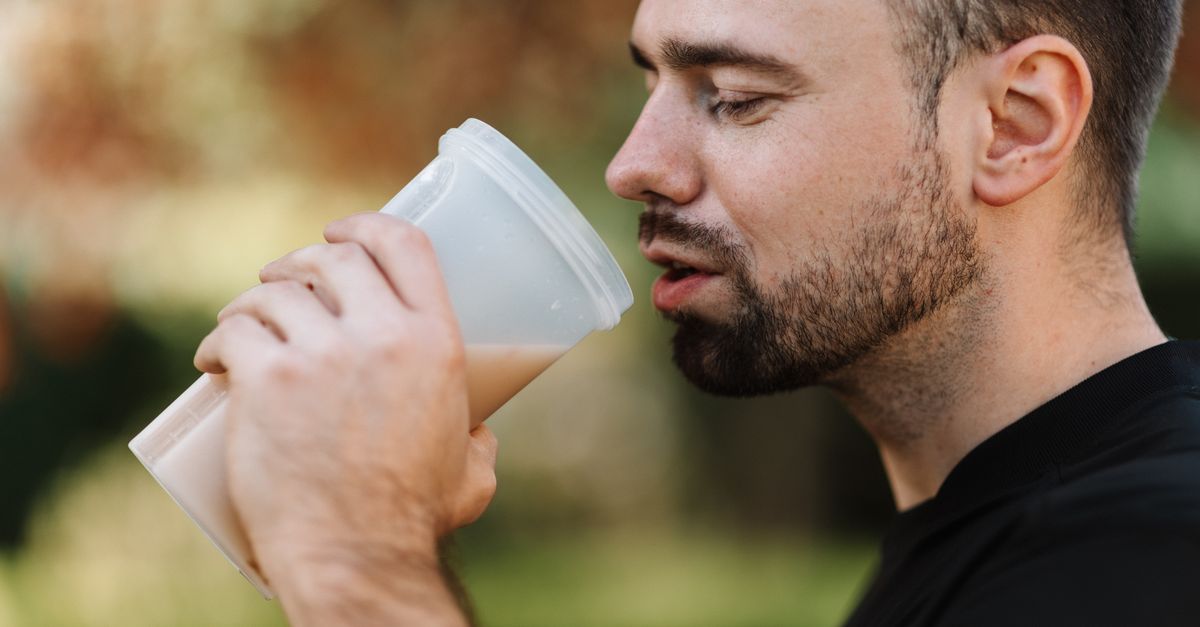
The muscle-recovery sweet spot is wider than you think: consuming protein within one to two hours after resistance training supports muscle protein synthesis, but your muscles remain responsive to protein for up to 24 hours. The precision window matters far less than hitting your total daily protein target.
If you’ve been rushing to chug a shake in the gym parking lot, you can relax. The old “anabolic window” myth—claiming you must eat protein within 30 minutes or lose your gains—has been debunked by current sports nutrition research. What does matter: eating enough protein overall, spacing it reasonably across your day, and understanding how your individual response might differ from the textbook average.
What you’ll need
To optimize protein intake timing:
- A way to track daily protein intake (app, food journal, or mental tally)
- Access to protein sources throughout the day (whole foods or supplements)
- Your bodyweight in kilograms (divide pounds by 2.2)
Prerequisites:
- Regular resistance training (at least twice per week)
- Basic understanding of protein-rich foods
Understanding the real timing window
Muscle protein synthesis—the process your body uses to repair and build muscle tissue—stays elevated for roughly 24 hours after you finish a strength workout. The peak occurs within the first one to two hours, then gradually declines.
Here’s what the evidence shows: consuming protein within that one-to-two-hour window accelerates muscle protein synthesis compared to waiting three or more hours. That’s a measurable effect, but it’s modest—especially when compared to the muscle-building impact driven by your total daily protein intake.
The International Society of Sports Nutrition confirms this hierarchy: daily protein totals matter most, meal distribution matters second, and precise post-workout timing matters least.
Individual differences in the timing window
The one-to-two-hour window is an average, not a universal rule. Your individual muscle protein synthesis response depends on several factors that sports nutrition research has only recently begun to clarify:
Training status: Untrained individuals show a longer, more diffuse anabolic response to protein intake compared to experienced lifters. If you’re new to strength training, your body stays primed for muscle building across a wider time window, making precise timing less critical.
Age: Older adults may experience different muscle protein synthesis kinetics. While the Mayo Clinic emphasizes that adequate protein intake becomes even more important with age, the timing sensitivity appears to shift—some research suggests that total daily intake and meal distribution matter more than post-workout windows for adults over 60.
Sex: Women may have different timing responses than men, though research in this area is still emerging. The broader takeaway: if you’re following generic timing advice and not seeing results, the issue is more likely your total protein intake than the clock.
Calculate your daily protein target first
Before worrying about when to eat protein, ensure you’re eating enough. For muscle building with resistance training, the American College of Sports Medicine recommends a range of 1.6 to 2.2 grams of protein per kilogram of bodyweight daily.
Quick calculation:
- Bodyweight in pounds ÷ 2.2 = bodyweight in kg
- Bodyweight in kg × 1.6 to 2.2 = daily protein target in grams
Example: A 150-pound person weighs 68 kg and needs 109 to 150 grams of protein per day.
Divide this across three to four meals for even distribution. This pattern supports muscle recovery as effectively as obsessing over post-workout timing.
If you’re unsure how much protein you actually need for your goals, start with more on how much protein do i really need? evidence over hype to establish your baseline.
Fasted training changes the timing equation
Morning workouts done in a fasted state—before breakfast, often 10 to 12 hours after your last meal—create a different recovery scenario. Your muscle protein stores are already depleted, and your body has been in a catabolic (breakdown) state overnight.
In this case, post-workout protein timing becomes more important. Research suggests that consuming protein within one to two hours of a fasted training session helps shift your body from breakdown to building mode more quickly. The protein doesn’t have to be a shake—scrambled eggs, Greek yogurt, or any complete protein source works—but the timing window tightens when you’ve trained fasted.
If you train fasted but can’t eat immediately after, aim to consume protein within two hours rather than waiting until lunch. That post-workout meal becomes your body’s signal to start recovery.
Practical protein timing windows

| Scenario | Recommended timing | Protein amount | Real-world example |
|---|---|---|---|
| Fasted morning strength session | Within 1–2 hours | 25–40g | Scrambled eggs with toast, or protein smoothie with banana |
| Fed-state training | Within 2–3 hours | 25–40g | Grilled chicken salad, or Greek yogurt with granola |
| Evening training | Within 2 hours | 25–40g | Baked salmon with quinoa, or cottage cheese with berries |
| Can’t eat immediately | Up to 3 hours is acceptable | 25–40g at next meal | Delayed meal still counts toward daily total |
The two-hour window is a practical guideline, not a hard cutoff. If you train at 6 p.m. and eat dinner at 7:30 p.m., you’re well within the effective range. If dinner won’t happen until 9 p.m., consider a smaller protein snack around 7 p.m., then eat your full meal later.
When timing precision matters more
Protein intake timing provides a larger benefit in specific situations:
You’re in a caloric deficit: When losing weight, precise timing helps preserve muscle mass while your body is under metabolic stress.
You train fasted regularly: Without pre-workout nutrition, post-workout protein becomes your primary recovery signal.
You eat only once or twice daily: Spreading protein across more meals improves muscle protein synthesis compared to one large dose, so post-workout timing becomes more important when overall distribution is limited.
You’re training for competition: Athletes optimizing performance in a short window may benefit from stacking every available advantage, including timing.
When timing precision matters less
If you’re hitting your daily protein target consistently and training regularly, timing becomes optional:
- You’re maintaining or slowly building muscle
- You eat three or more balanced meals per day
- Your focus is general health and fitness, not competitive performance
- You’re not in a significant caloric deficit
- You typically train in a fed state (with food consumed within a few hours before exercise)
In these cases, eating a protein-containing meal within two to three hours of training is sufficient. Don’t stress about the clock.
Understanding protein quality and amino acid content

Not all protein sources are identical for muscle recovery. Complete proteins—those containing all nine essential amino acids your body can’t make on its own—are more effective at triggering muscle protein synthesis than incomplete proteins.
The amino acid leucine appears to play a particularly important role in activating the muscle-building process. Animal proteins like whey, chicken, fish, and eggs are rich in leucine and essential amino acids, making them efficient choices for post-workout meals. Plant proteins can work equally well when combined properly—pairing rice with beans, or using pea and rice protein together, provides a complete amino acid profile.
According to CDC nutrition guidelines, the quality of your protein sources matters alongside the total amount. A post-workout meal built around a complete protein source supports recovery more effectively than the same amount of protein from an incomplete source.
If you prefer plant-based proteins, focus on complete sources like soy, quinoa, or properly combined complementary proteins. These deliver the essential amino acids your muscles need without requiring animal products.
Whole foods work as well as shakes
Protein powder is convenient, not superior. A post-workout shake with 25 to 30 grams of whey protein is functionally equivalent to a meal of grilled chicken, fish, eggs, or Greek yogurt providing the same amount of protein. The digestion-speed difference between fast-absorbing whey and slower-digesting whole foods has negligible impact when total daily intake is adequate.
Choose based on convenience, preference, and hunger. If you’re not hungry immediately after training, wait and eat a regular meal.
Verify your approach is working
Track these markers over four to six weeks:
- Strength progress: Are you lifting heavier weights or completing more reps?
- Recovery feel: Do you recover well between sessions without excessive soreness?
- Body composition: Are you gaining muscle or maintaining it during a cut?
If all three are trending positively, your protein timing and total intake are working. If not, first check whether you’re hitting your daily protein target before adjusting timing.
Troubleshooting common scenarios
Problem: I train fasted in the morning and can’t eat immediately after.
Eating within two hours is still effective. A post-workout meal at 8 a.m. after a 6 a.m. session is fine. If you prefer to wait until lunch, you’re still getting the protein—just outside the peak window. Your total daily intake will have the larger impact.
Problem: I’m not hungry after workouts.
Don’t force-feed. Wait 30 to 60 minutes, then try a lighter protein source like yogurt or a smoothie. Appetite typically returns as your body shifts from exercise mode to recovery mode.
Problem: I can only work out late at night.
Eating protein before bed supports overnight muscle recovery. A post-workout meal at 9 or 10 p.m. is appropriate; your body doesn’t stop building muscle while you sleep.
Problem: My schedule is chaotic and I can’t time meals consistently.
Prioritize hitting your daily protein total across the day. Consistency in total intake beats perfection in timing. Consider How to Build Better Eating Habits That Actually Stick for sustainable approaches that work with unpredictable days.
FAQ
Do I need to eat protein immediately after working out?
No. Muscle protein synthesis remains elevated for up to 24 hours after resistance training. Consuming protein within one to two hours provides a benefit, but waiting up to three hours still supports recovery as long as you meet your daily protein needs.
What’s the best time to eat protein for muscle building?
Total daily protein intake matters more than any single meal. Aim for 1.6 to 2.2 grams per kilogram of bodyweight spread across three to four meals. Consuming some protein within two hours of strength training offers an advantage but isn’t mandatory for most people.
Does protein timing matter more than total daily protein?
No. Research consistently shows that daily protein totals drive most muscle-building results, while timing accounts for a smaller portion. Get your total intake right first, then optimize timing if it fits your schedule and goals.
Should I use a protein shake right after exercise?
Only if it’s convenient. A shake provides quick, easy protein, but a whole-food meal with equivalent protein content works equally well. Choose based on your hunger, schedule, and preferences—both are effective.
Does training fasted change protein timing needs?
Yes. When you train in a fasted state—typically first thing in the morning before eating—post-workout protein timing becomes more important. Your body has been in a breakdown state overnight, so consuming protein within one to two hours helps shift to recovery mode more quickly.
Are animal proteins better than plant proteins for muscle recovery?
Complete proteins—those with all nine essential amino acids—are most effective for triggering muscle protein synthesis. Animal proteins like chicken, fish, eggs, and dairy are naturally complete. Plant proteins work equally well when you choose complete sources like soy or quinoa, or combine complementary proteins like rice and beans.
The central truth about protein timing is that it matters, but less than consistency. If precision timing fits easily into your routine—a post-workout shake, a meal within two hours—it offers an edge. If it doesn’t, focus on meeting your daily protein target across balanced meals. That foundation drives most of your muscle recovery and building, with or without perfect timing.
Individual factors—your training status, age, whether you train fasted, and how many meals you eat daily—shift the timing equation more than the clock does. Pay attention to your total protein intake first, then adjust timing based on your specific situation rather than chasing a universal window that doesn’t exist.
This article is for general informational purposes only and is not a substitute for professional medical or nutritional advice. Consult a registered dietitian or healthcare provider for personalized guidance.