
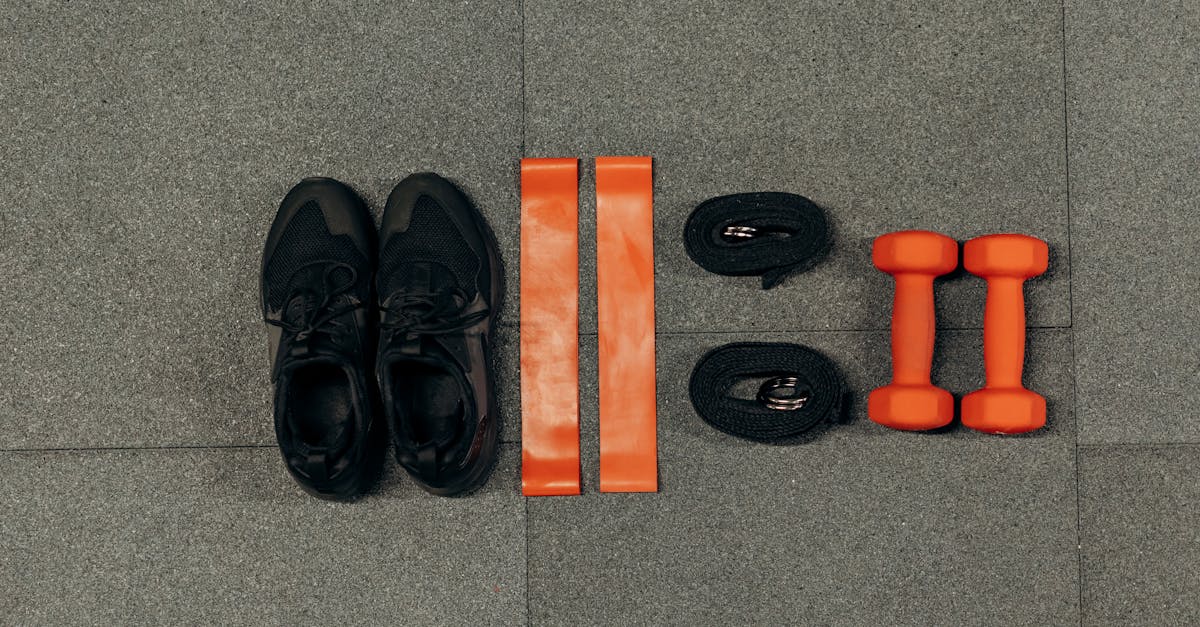
The research on resistance training equipment shows something most comparison articles miss: muscle growth is driven by training volume (sets × reps × weight), not equipment type. Dumbbells and resistance bands produce comparable results when you match the total work done. The real question isn’t which equipment “works better”—it’s which fits your current strength level, your goals, and how you need to progress over time.
ACSM guidelines for muscle growth recommend 8–12 repetitions per set, 3–4 sets per exercise, performed 2–3 times per week minimum. Any equipment that lets you hit this volume threshold will drive adaptation—the difference lies in how long each option supports continued progression.
Quick verdict:
- Dumbbells are the best choice for compound lifts, functional strength, and fine-grained progression (adding 2.5 kg at a time)
- Resistance bands are the best choice for isolation work, joint-friendly training, portability, and variable resistance
- Cables are the best choice for controlled isolation and functional movement angles when space and budget allow
- Bodyweight training is the best choice for accessibility, building a foundation, and mobility work
- Hybrid approach (bands + dumbbells) is the best choice for intermediate trainees who need heavy loads plus joint-friendly volume
At a glance
| Equipment | Cost | Space Required | Progression | Best For | Biggest Weakness | |---|---|---|---|---| | Dumbbells | $300–600 (adjustable 5–40 kg) | ~1 cubic ft per pair + rack | Fine (2.5–5 kg increments) | Compound lifts, functional strength, stabilization | Expensive at heavy loads; impractical above 50 kg | | Resistance Bands | $20–80 per set (3–5 loops) | Minimal (coils in bag) | Coarse (light→medium→heavy jumps) | Isolation, joint-friendly, portability | Low durability; large progression jumps | | Cables | $300–1000+ | 4×6 ft footprint | Moderate (5 lb increments) | Isolation, functional angles | High upfront cost; less versatile than dumbbells | | Bodyweight | Free | None | Limited (plateaus without tempo work or added load) | Accessibility, foundation | Strength ceiling without progression strategies |
Dumbbells — best for compound lifts and long-term progression
Dumbbells let you perform compound movements (chest press, rows, overhead press, squats) with the added demand of stabilizing the weight through space. Research shows that free weights recruit more stabilizer muscles than fixed-path machines because you have to control the load in all directions—not just lift it.
The practical advantage: fine-grained progression. You can add 2.5 kg (5 lbs) per dumbbell when you’re ready, which means you can keep progressing for years without huge jumps that stall you out. An adjustable dumbbell set (5–40 kg) costs $300–600 and covers most home trainees for the first few years of training.
Realistic timeline: Most trainees transition to dumbbells around month 6–9 after starting with bodyweight or bands. By that point, you’ve built enough baseline strength that band resistance feels insufficient for compound movements, and you need heavier loads to keep driving adaptation.
Strengths:
- Unlimited heavy-load capacity within budget
- Small increments support sustainable progression
- Stabilizer recruitment builds functional strength that transfers to daily life
- High durability (metal construction lasts decades)
Weaknesses:
- Expensive at heavier weights (50+ kg pairs run $200–400 each)
- Form-dependent—improper technique (bouncing, unstable) risks injury
- Not portable; impractical for travel
Best for: Intermediate and advanced trainees who need heavy loads and fine progression; anyone prioritizing functional strength and compound movements.
Resistance bands — best for isolation, portability, and joint-friendly training
Resistance bands offer variable resistance: the further you stretch the band, the harder it becomes. Research suggests this variable resistance may enhance strength at lockout (full extension), though the effect is modest for general muscle growth. The real advantages are cost, portability, and reduced joint stress.
A set of three to five loop bands (light, medium, heavy, extra-heavy) runs $20–80 and fits in a backpack. Bands work well for isolation exercises (bicep curls, lateral raises, leg abductions) and for beginners who need 3–6 months to build foundational strength before investing in heavier equipment.
Realistic timeline: Bodyweight training typically sustains progress for 3–6 months before you plateau. Adding bands during months 4–6 extends that window another 3–6 months by providing external resistance without the joint stress of dumbbells. By month 9–12, most trainees need finer progression increments than bands can provide.
Strengths:
- Minimal cost and storage—entire kit fits in a drawer
- Joint-friendly (no impact forces; accommodating resistance reduces strain)
- Variable resistance enhances peak strength at lockout
- Excellent for rehab, prehab, and accessory work
Weaknesses:
- Coarse progression (jumping from medium to heavy band can be a 15–20 lb equivalent leap)
- Durability issues (bands degrade with UV exposure, wear, and repeated stretching)
- Requires secure anchor points for many exercises
- Practical ceiling at 50–60 lbs equivalent resistance
Best for: Beginners building foundational strength; experienced trainees adding isolation and variety; anyone who travels frequently or has limited space.
Dumbbells vs resistance bands: the direct comparison

| Criterion | Dumbbells | Resistance Bands |
|---|---|---|
| Muscle growth potential | Yes (if volume matched) | Yes (if volume matched) |
| Stabilizer engagement | High (requires balance) | Low (guided range) |
| Progressive overload granularity | Fine (2.5 kg increments) | Coarse (large jumps between band levels) |
| Heavy load capacity | Unlimited (within budget) | Limited (~50 lbs equivalent ceiling) |
| Joint stress (proper form) | Safe | Safe |
| Joint stress (improper form) | High injury risk | Lower injury risk |
| Portability | Poor | Excellent |
| Cost for starter kit | $300–600 | $20–60 |
| Learning curve | Moderate (form-dependent) | Low |
| Durability | High (metal) | Moderate (wear/tear) |
The evidence-backed answer: muscle hypertrophy is driven by training volume, not equipment type. Both dumbbells and bands build muscle when you match the total sets, reps, and load. The difference lies in progression capacity and stabilization demand.
Dumbbells allow you to add small increments (2.5 kg) indefinitely, which is critical once you plateau on beginner gains. Bands require jumping from one resistance level to the next—often a 15+ lb leap—which can stall progress. For stabilization and functional strength, dumbbells recruit more motor units because you have to control the load in three dimensions.
But bands aren’t inferior—they’re different. Variable resistance (harder at lockout) benefits sport-specific power. Joint-friendly tension curves reduce injury risk during rehab or high-volume isolation work. And for the first 3–6 months of training, bands provide enough stimulus to drive adaptation at a fraction of the cost.
Hybrid equipment strategies — combining tools for better results
Modern evidence-based training doesn’t choose one equipment type—it combines them strategically. The most practical hybrid approach pairs dumbbells for heavy compound lifts with bands for accommodating resistance and joint-friendly isolation.
Why this works: Dumbbells provide the heavy loading needed for strength progression on compound movements (chest press, rows, squats). Bands add variable resistance to the same movements—attach a band to the dumbbell or anchor it under your feet during presses. The band increases tension at lockout (where dumbbells feel lightest), forcing your muscles to work harder through the full range of motion. CDC physical activity guidelines emphasize progressive muscle-strengthening activities; combining tools lets you progress longer before equipment becomes the limiting factor.
Practical application:
- Compound lifts: Use dumbbells for the primary load, add bands for 10–15% additional resistance at lockout (improves lockout strength without joint stress at bottom position)
- Isolation work: Bands for lateral raises, face pulls, leg curls (joint-friendly, easier to hit target rep ranges)
- Deload weeks: Swap dumbbells for bands to maintain volume while reducing joint stress
- Travel: Bands maintain stimulus when dumbbells aren’t available
Realistic timeline: Introduce hybrid training around month 9–12, once you’ve built proficiency with dumbbells and understand how to manipulate training variables. Before that point, focus on mastering basic compound movements with one tool at a time.
This hybrid approach is evidence-backed for intermediate trainees: it extends the ceiling on home-gym progression without requiring cables or machines. Total added cost: $30–60 for a band set on top of your existing dumbbell investment.
Cables and machines — best for controlled isolation
Cable machines ($300–1000+) and fixed-path machines ($500–2000+) offer constant tension and guided movement. Cables shine for isolation exercises at functional angles (wood chops, face pulls, cable flies) that are hard to replicate with dumbbells. Machines reduce stabilizer demand, which is useful for beginners learning movement patterns or for isolating specific muscles without fatigue from stabilization.
The downside: high cost, large footprint (4×6 ft or more), and reduced stabilizer recruitment compared to free weights. For home gyms, cables are a luxury add-on after dumbbells and bands, not a starting point.
Best for: Isolation work, functional movement patterns, beginners who need guided ranges of motion, anyone rehabbing an injury.
Bodyweight training — best for accessibility and foundation

Bodyweight exercises (push-ups, squats, pull-ups, planks) cost nothing and require no space. They’re the most accessible entry point to resistance training and build foundational movement patterns that carry over to weighted exercises.
The limitation: progression. Progressive overload is essential for continued strength and muscle gains, and bodyweight training plateaus quickly unless you manipulate tempo (slow eccentrics), reduce assistance (assisted to unassisted pull-ups), or add external load. For most people, bodyweight alone sustains progress for 3–6 months before you need added resistance.
Realistic timeline: Start here if you’re completely new to resistance training. Month 1–3 focuses on mastering form and building work capacity. By month 4–6, add bands to extend progression. By month 6–9, transition to dumbbells for compound lifts while keeping bodyweight exercises for accessory work.
Best for: Complete beginners, travel workouts, mobility and accessory work, anyone building a foundation before adding equipment.
How to choose based on your goals and experience
Beginners (0–6 months of training): Start with bodyweight training for the first 3 months to build movement patterns and work capacity. Add resistance bands around month 4–6 when bodyweight exercises no longer feel challenging for 8–12 reps. A $30 band set covers isolation and compound movements during this phase. After 6–9 months total, you’ll plateau on bands and need fine-grained progression—that’s when dumbbells become essential.
Intermediate trainees (6 months–3 years): Dumbbells (5–25 kg adjustable set) are non-negotiable. You need heavy loads and small increments to keep progressing on compound lifts. Add bands for isolation, burnout sets, and accommodating resistance on dumbbell movements. Consider the hybrid approach (dumbbells + bands combined) around month 9–12 to extend your progression ceiling.
Advanced trainees (3+ years): Dumbbells + bands + bodyweight for accessory work. Cables are optional if budget and space allow. At this stage, periodization and progression strategy matter more than equipment choice—you’ve already built the strength base that lets you extract results from any tool.
Goal: Hypertrophy (muscle growth): Any equipment works if you match volume and hit ACSM recommendations (8–12 reps, 3–4 sets per exercise, 2–3 times per week). Dumbbells let you reach high volumes faster because you can load heavier. Bands require more sets to match the same total work.
Goal: Strength: Dumbbells edge ahead. Heavy loads and stabilizer recruitment drive neural adaptation—the basis of strength gains. Bands support but plateau sooner. Transition to dumbbells by month 6–9 if strength is the priority.
Goal: Functional fitness: Dumbbells win. Free-weight stabilization transfers to daily movements (lifting groceries, carrying kids, yard work). Bands are supplementary. Hybrid approach adds value by improving lockout strength in functional movement patterns.
Goal: Joint health or rehab: Bands preferred. Variable resistance and accommodating tension reduce joint stress. Proper form with dumbbells is equally safe, but the margin for error is smaller.
The minimal research-backed home setup
If you’re starting from scratch, this combination covers 90% of effective resistance training:
-
Months 1–3: Bodyweight only. Free. Builds foundational movement patterns and work capacity. Focus on mastering push-ups, squats, planks, and rows (using a table edge or suspension trainer).
-
Months 4–6: Add resistance bands. $20–60 for a set (light, medium, heavy). Extends progression when bodyweight plateaus. Covers isolation and adds external resistance to compound movements.
-
Months 6–9: Add adjustable dumbbells (5–20 kg). $200–400. Once bands feel too easy for 8–12 reps on compound lifts, dumbbells provide the fine-grained progression needed to keep driving strength gains.
-
Months 9+: Hybrid training. Combine dumbbells (heavy compound lifts) + bands (accommodating resistance, isolation) + bodyweight (accessory work). Total cost: $220–460. Total space: one corner of a room.
This timeline matches how most trainees actually progress. Trying to skip straight to dumbbells without the bodyweight foundation often leads to form breakdowns and injury. Building up through bodyweight → bands → dumbbells gives your joints, connective tissue, and movement patterns time to adapt.
FAQ
Can you build muscle with just resistance bands?
Yes, for 6–12 months. Research shows muscle growth is driven by training volume, not equipment type. Bands build muscle when you perform enough sets and reps to fatigue the muscle (aim for ACSM’s recommendation of 3–4 sets of 8–12 reps, 2–3 times per week). The limitation is progression—bands have coarse jumps between resistance levels, which makes it harder to add load gradually once you adapt. Most trainees plateau around month 6–12 on bands alone and need fine-grained progression (dumbbells) to keep growing.
Are dumbbells better than bands for strength?
For maximal strength, yes. Dumbbells allow heavier loads and recruit more stabilizer muscles, both of which drive neural adaptation—the basis of strength gains. Bands support strength development but plateau sooner because the practical resistance ceiling is around 50–60 lbs equivalent. If your goal is lifting heavy or functional strength that transfers to daily life, plan to transition to dumbbells by month 6–9.
Do I need both dumbbells and resistance bands?
Most intermediate trainees (6+ months) benefit from both. Dumbbells handle compound lifts and heavy progression. Bands cover isolation, joint-friendly volume, and accommodating resistance when combined with dumbbells. Together, they provide the variety and progression strategies needed to sustain long-term training. If budget forces a choice: start with bands (cheap, low injury risk, good for months 4–9), then add dumbbells when you plateau.
What home workout equipment takes up the least space?
Resistance bands. A full set coils into a bag smaller than a shoebox. Adjustable dumbbells (5–40 kg) require about one cubic foot of floor space plus a small rack. Bodyweight training requires no equipment. If space is the primary constraint, bodyweight (months 1–3) + bands (months 4+) covers most training needs for the first 6–12 months.
When should I switch from bands to dumbbells?
Around month 6–9 after starting resistance training, or sooner if bands no longer feel challenging for 8–12 reps on compound movements (rows, presses, squats). The practical signal: when jumping from your current band to the next resistance level feels like too big a leap (you can barely complete 6 reps with proper form), you’ve hit the coarse-progression ceiling and need dumbbells’ finer increments.
The bottom line: Equipment type doesn’t determine results—training volume and progressive overload do. Dumbbells offer fine-grained progression and heavy-load capacity; resistance bands offer portability, joint-friendly tension, and low cost; combining both (hybrid approach) extends your home-gym progression ceiling without requiring machines. Start with bodyweight training (months 1–3), add bands when that plateaus (months 4–6), transition to dumbbells for compound lifts (months 6–9), then use a hybrid approach (dumbbells + bands) for continued progression. For a minimal home setup, this timeline costs $220–460 total and covers the first 2+ years of effective training.
For more on the principle that applies across all equipment, see progressive overload. If you’re interested in stabilization work, How Isometric Exercises Build Strength Without Moving covers static-hold training.
This article is for general information only and is not a substitute for professional medical advice. If you have an injury, joint condition, or health concern, check with a doctor or physical therapist before starting resistance training.